|Property Advisory & Acquisition Support for Italy and Spain|
|Relocation Support in London|
How to Buy Property in Italy
A Practical Guide for International Buyers
Buying property in Italy can be an exciting opportunity, whether you are looking for a lifestyle change, a second home, or a long-term investment.
However, the process differs significantly from many other countries, and documentation, planning regulations, and local practices can
vary widely between regions.
This guide explains the key stages of purchasing property in Italy and highlights some of the factors international buyers should consider before committing.

Why Italy attracts international
property buyers
Italy has long attracted international buyers seeking a combination of lifestyle, culture and long-term property value.
From historic cities and rolling countryside to coastal villages and mountain landscapes, the country offers a remarkable diversity of locations and property styles.
For many buyers, the appeal begins with the Italian lifestyle. Daily life often revolves around outdoor living, strong local communities and a deep connection to food, culture and landscape.
Whether enjoying a morning coffee in a village square, walking through vineyards or spending time by the sea, the rhythm of life in many parts of Italy can feel very different from that of larger international cities.
Another important factor is the diversity of regions. Italy is not a single homogeneous market. Each region has its own identity, climate and architectural traditions.
Buyers interested in countryside properties often explore areas such as Tuscany or Umbria, known for their historic farmhouses and rural landscapes.
Coastal regions such as Liguria, Sardinia or parts of southern Italy offer a completely different environment, while historic cities like Florence, Rome and Milan provide urban living with exceptional cultural heritage.
Italy is also widely appreciated for its architectural character.
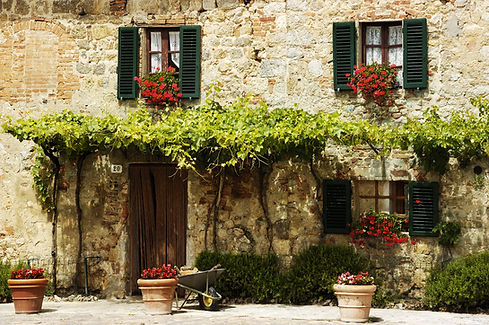
Many properties combine historic construction with distinctive local materials and craftsmanship. Stone farmhouses, historic townhouses, villas with gardens and rural estates are common in many regions.
For buyers interested in restoration or renovation projects, these buildings often provide unique opportunities to create homes with both historical and personal character.
Compared with several other European countries, Italy can also offer relatively accessible property values, particularly outside the most famous cities and coastal areas.
While prime locations command higher prices, many regions still provide opportunities to acquire distinctive properties at prices that would be difficult to find in other Mediterranean destinations.
At the same time, the diversity and historical nature of Italian property means that each purchase should be approached carefully. Documentation, planning history and building conditions can vary significantly from one property to another, which is why many international buyers take time to fully understand the property before committing.
How can foreigners legally buy property in Italy?
In most cases, foreign nationals are able to purchase property in Italy, including residential homes, rural properties and apartments in historic towns and cities.
Italian law allows foreign individuals to acquire real estate provided that the principle of reciprocity applies. This means that citizens of countries where Italian nationals are permitted to buy property are generally allowed to purchase property in Italy under similar conditions.
In practice, buyers from many countries, including the United Kingdom, the United States, Canada, Australia and most European nations, can legally acquire property in Italy without significant restrictions.
Before completing a purchase, foreign buyers will typically obtain an Italian tax identification number (codice fiscale), which is required for property transactions and for signing official documents.
The role of the notary
Property purchases in Italy must be formalised before a notary (notaio), a public official responsible for ensuring that the transaction complies with Italian law.
The notary verifies the identities of the parties, confirms the legal ownership of the property and prepares the final deed of sale (rogito). Once the deed is signed, the notary registers the transfer of ownership with the relevant public registries.
It is important to note that the notary’s role focuses primarily on the legal validity of the transaction. The notary does not normally carry out a technical inspection of the building or evaluate the physical condition of the property.
Practical considerations for international buyers
Although the legal framework for foreign ownership is relatively straightforward, the practical aspects of purchasing property in Italy can vary depending on the property, its location and its history.
Documentation, planning compliance, cadastral records and the physical condition of the building are factors that may require careful review before committing to a purchase.
For this reason, international buyers often take time to ensure that the property has been properly evaluated and that all relevant information has been clarified before proceeding with the transaction.